
Opioids
Between relief, seeking effects… and losing control
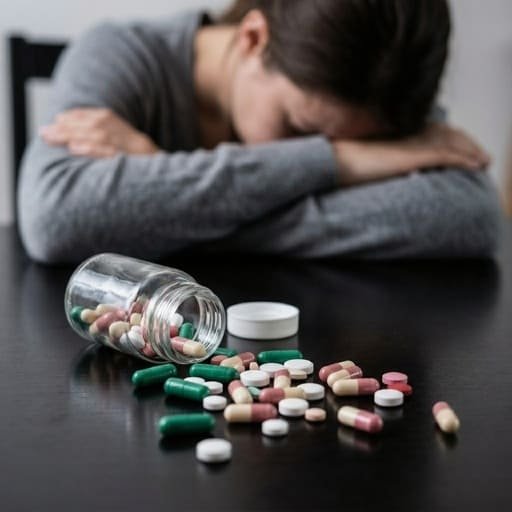
Opioids are not only a matter for hospitals or medical prescriptions. They can enter a life in two very different ways:
- following pain treatment
- in a party or recreational context, seeking relaxation, euphoria or disconnection
In both cases, the mechanism of addiction is the same. And it can take hold faster than you might imagine.
What are opioids?
Opioids are substances that act on the brain receptors involved in pain and pleasure.
They include in particular:
- morphine
- oxycodone
- tramadol
- codeine
- fentanyl
- but also heroin (an illicit opioid)
What they have in common: a powerful action on the brain’s reward system.
They reduce pain.
They provide a feeling of relaxation, sometimes euphoria. They can create an impression of warmth, safety and deep release.
This is precisely what explains their addictive potential.
When medical use goes off course
It often starts with a legitimate prescription. Acute or chronic pain. A real need for relief.
Then, gradually:
- tolerance sets in (doses need to be increased)
- fear of the pain returning appears
- the medication also becomes an emotional regulator
It no longer relieves only the body. It soothes anxiety. It helps with sleep. It eases a more general distress. Dependence can then take hold without the person being fully aware of it.
When use is festive or recreational
In other situations, the path into use is different.
It can start:
- at parties
- out of curiosity
- seeking new sensations
- to « come down » after stimulants
- to relax deeply
The opioid effect can give an impression of intense calm, total release, distance from inner tension. But opioids have one particular feature: their ability to create dependence quickly, sometimes from the first repeated exposures.
As the effect is brief, the brain quickly learns to ask for more.
Why addiction takes hold so quickly
Opioids strongly stimulate the release of dopamine. The brain records: « This relieves me. This makes me feel good. This is necessary to me. »
Over time:
- tolerance increases
- doses get closer together
- desire becomes need
- withdrawal appears when stopping
Withdrawal syndrome (diffuse pain, agitation, anxiety, insomnia, flu-like symptoms) reinforces the vicious circle.
You no longer use just to feel pleasure. You use to avoid withdrawal. This mechanism is neurobiological. It is not a moral failing.
The specific risks of opioids
Whether prescribed or used recreationally, the risks are real:
- respiratory depression
- risk of overdose
- cognitive impairment
- gradual isolation
- disruption of work or personal life
- increased risk when combined with alcohol or other substances
In recreational use, uncertainty about composition and dosage increases the danger further. In diverted medical use, gradual normalisation often delays awareness.
The warning signs
Perhaps you recognise:
- increasing doses
- difficulty spacing out doses
- fear of withdrawal
- hidden use
- ambivalence: wanting to stop… yet continuing
This inner tug-of-war is common. It is often the first signal that support would be useful.
Why getting help is essential
Stopping opioids should not be improvised. Withdrawal can be difficult, and sometimes dangerous if not properly supervised.
But beyond the physical aspect, there is also:
- managing emotions without the substance
- rebuilding balance
- preventing relapse
Specialised support makes it possible to:
- objectively assess your situation
- make reduction or stopping safe
- understand the role the substance plays in your life
- put in place tailored, gradual strategies
This is not about judging. It is about protecting your health and your future.
You do not have to handle this alone
Whether your use began with a medical prescription or in a party setting, the mechanism of addiction is the same.
The earlier you act, the simpler it is.
A first appointment allows you to take stock in complete confidentiality, assess the risks and consider concrete solutions.
You are not alone. Let's take the first step together.
Fabrice Plantier supports you with care and without judgement, towards lasting change. A first appointment is all it takes to begin.