
Video game addiction: intense passion or loss of control?
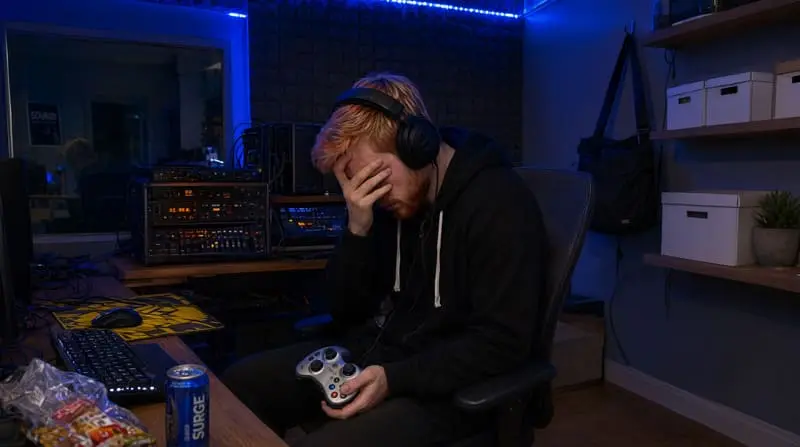
Playing a lot does not automatically mean being dependent. A long evening, a weekend devoted to a new release or strong involvement in a gaming community can be part of a passion without any disorder being present.
Most people who play video games show no addiction at all. The real question is not only: « How many hours do I play? » It is rather: « What does gaming cost me, and can I still choose when I start, when I stop and the place I give it? »
Sleep, school, work, relationships, health and attempts to cut down often provide more reliable benchmarks than screen time. A passion remains a passion as long as it keeps its place among the other dimensions of life. The problem begins when gaming becomes a priority, hard to control and continued despite consequences that are already visible.
Video games: a widespread practice, most often without a problem
Video games are now one of the most common hobbies. According to data cited by the French national health insurance (Assurance Maladie), 70% of French people have played a video game in the last six months.
This very common practice invites us to avoid two opposite mistakes. The first is to think that playing a lot is necessarily a sign of video game addiction. The second would be to think that a problem can never exist because gaming has become ordinary.
The World Health Organization reminds us that gaming disorder affects only a small part of the people who play. The French national health insurance estimates that, on average, about 3% of French people are at risk of video game addiction. This figure does not mean that 3% of players have received a diagnosis: it describes a population at risk, based on signs such as loss of control and continuing despite the consequences.
Intensive use is also more common among young people. According to the 2024 MILDECA/Harris Interactive Barometer, daily intensive use of video games and video content, defined in this study as more than four hours a day, is twice as common among 15-24 year olds as in other age groups.
This benchmark describes a generational trend. It is not a diagnostic threshold. A person can play for a long time without their life balance being affected, while another can face real difficulties with less gaming time.
Intense passion or video game addiction: where is the line?
The WHO recognizes gaming disorder in the ICD-11. Its definition rests on three main benchmarks: loss of control, priority given to gaming, and continuing despite harmful consequences.
Loss of control
The person can no longer easily decide when they play, how long they play or when they stop.
They may plan a short session and continue for several hours. They may decide to take a break, then start again sooner than planned. Attempts to cut down repeat without lasting.
This difficulty should not be confused with a simple occasional lack of organization. It becomes worrying when it repeats and when the person feels they no longer really choose.
Gaming becomes a priority
Gaming gradually takes precedence over other interests or obligations.
Meals are delayed, sleep shortened, outings cancelled. School, professional or domestic work comes after the current session. Exchanges with loved ones become less frequent or revolve mainly around gaming.
A strong passion can take up a lot of time without erasing everything else. In problematic use, gaming tends instead to become the dominant activity, sometimes the only expected source of satisfaction.
The practice continues despite its consequences
The person continues or increases their gaming time even though the repercussions are already visible: fatigue, delays, falling grades, family conflicts, isolation, physical pain or financial difficulties.
They may recognize that gaming is causing them problems while finding it very difficult to change. Pleasure is sometimes no longer even at the forefront. The practice continues because it seems necessary to cope with boredom, anxiety or negative thoughts.
For a clinical diagnosis to be made, the WHO indicates that these signs must be severe enough to significantly impair personal, family, social, school or professional life. They usually appear clearly for at least twelve months.
A very intense weekend, a holiday period or the exceptional release of a game is therefore not enough to conclude a disorder.
Key pointThe number of hours is not enough to define an addiction. A passion remains compatible with a balanced life. The warning signal appears when gaming becomes a necessity, durably takes precedence over the rest and remains difficult to limit despite its consequences.
The signs that should alert
The signs of video game addiction do not always appear as a sudden break. They can set in gradually.
Gaming becomes a compulsory refuge
Playing can help to relax, to reconnect with friends or to get through a stressful period. This is not a problem in itself.
The situation deserves more attention when gaming becomes the only available way to regulate mood, avoid difficult thoughts or cope with a hard day.
The person may feel that they are only well when they play. Other activities bring less pleasure. Over time, they may seek to increase the length or intensity of sessions to achieve the same relief.
Not playing causes distress
The French national health insurance describes the possible appearance of psychological distress when the person cannot play.
This can show up as irritability, anxiety, agitation, sleep problems or a very degraded mood. It is not simply being disappointed that a session was cancelled. The discomfort becomes significant and disrupts daily functioning.
This sign should be considered with caution. Isolated irritability does not allow us to conclude dependence. It is its intensity, its repetition and its association with other difficulties that matter.
The impact becomes concrete
Sleep is often one of the first areas affected. Schedules shift, nights shorten and fatigue sets in.
At school or at work, concentration can decrease. Homework is not done, absences appear or performance drops. In social life, relationships can shrink to online contacts, while usual activities are abandoned.
Physical health can also be affected: dry eyes, posture-related pain, lack of activity, weight gain or poor sleep.
Repeated spending on games, expansions or in-game purchases can also create tension. It should be observed without jumping to conclusions, but it becomes worrying when it is hard to control or destabilizes the budget.
WarningThe impact on sleep, school, work or relationships is a better benchmark than the number of hours played. When several areas are repeatedly affected and attempts to cut down fail, it becomes useful to take stock with a professional.
Attempts to cut down fail
The person decides to play less, sets rules or uninstalls a game, then quickly starts again. Returning to gaming can be accompanied by an increase in time spent.
This cycle does not by itself prove an addiction, but it is an important benchmark when it repeats.
The French national health insurance describes an average profile of a person at risk corresponding to a man of about 31 years old without a job. This statistical average must never become a « typical profile ». Gaming disorder can affect people of very different ages, situations and backgrounds.
For parents: how to react without conflict or panic
When a teenager plays a lot, the first reaction is often to count the hours or to threaten to remove all screens. This approach can strengthen the conflict without helping to understand the situation.
It is more useful to observe what gaming actually changes.
Is sleep sufficient? Are school results changing? Does the teenager still see friends, take part in family life and keep other interests? Can they interrupt a session for a planned obligation? Are the limits discussed or systematically impossible to keep?
Intensive practice during holidays or around a new game can remain temporary and without lasting consequences. It becomes more worrying when gaming repeatedly encroaches on school, relationships, sleep or health.
Dialogue works better starting from concrete observations rather than labels.
Saying « I notice you sleep less and you can’t get up anymore » opens up discussion more than « you’re addicted ». It is possible to set clear and consistent limits while recognizing what gaming brings: pleasure, challenge, social connection, a sense of competence or a breathing space.
Alternatives are easier to accept when they are not presented as punishments. Physical activity, outings, shared projects or time with loved ones can help rebalance daily life, without trying to brutally remove a practice that sometimes plays an important emotional role.
When conflicts last, when limits fail or when gaming strongly affects family, school or social life, professional advice can help.
When and how to get help?
There is no need to identify yourself as « addicted » to consult. You can ask for advice as soon as gaming weighs on you, when attempts to cut down fail or when a loved one no longer knows how to react.
A general practitioner can carry out a first assessment and refer to an appropriate professional. An addiction specialist, a psychologist or a specialized addiction support service can also support the person concerned and their family.
The assessment covers the whole situation: place of gaming, sleep, mood, relationships, studies or work, physical health and any other difficulties.
According to the French national health insurance, behavioural addictions frequently coexist with anxiety disorders, mood disorders, ADHD or other addictions. This does not mean that everyone who plays a lot has another disorder. It mainly shows the value of a global assessment, rather than acting only on screen time.
Useful resourceVideo game addiction is a behavioural addiction recognized as a disease (WHO, ICD-11; French national health insurance). You can consult as soon as a doubt exists, without being « addicted »: general practitioner, addiction specialist or specialized support service.
Care can be provided on an outpatient basis, without hospitalization. The goal is not always to stop video games completely. It can be about regaining control, rebalancing activities, working on sleep or understanding what gaming soothes.
A brutally imposed stop is not necessarily appropriate, especially when gaming has become a mood regulator. Support can help build progressive and realistic changes. You can also explore what this article says about the mechanisms of screen addiction to better understand what is at play.
If you want to continue with related reading, you can subscribe to the Adikto33 newsletter or request the free ebook.
Frequently asked questions about video game addiction
From how many hours of gaming do we speak of addiction?
There is no hourly threshold that, on its own, allows diagnosing video game addiction. The main benchmarks are loss of control, priority given to gaming and continuing despite consequences on sleep, relationships, studies, work or health.
Is gaming disorder recognized as a disease?
Yes. The World Health Organization included gaming disorder in the ICD-11, in force since 2022. In France, the national health insurance also presents video game addiction as a recognized behavioural addiction. Diagnosis, however, requires a professional assessment.
My teenager plays a lot: is this worrying?
Not necessarily. Intensive practice can remain compatible with a balanced life. It is more useful to observe sleep, school, relationships, other activities and the ability to respect limits. If gaming durably encroaches on these areas, professional advice can help.
Can you be dependent on video games without playing every day?
Yes, frequency is not enough to define the disorder. A practice can be problematic when it becomes hard to control, takes precedence over other activities and continues despite significant consequences. Conversely, playing daily does not automatically mean an addiction is present.
Can an addiction specialist help with video games?
Yes. Behavioural addictions are part of the field of addiction medicine. Support can help understand the function of gaming, regain control and work on its consequences. It adapts to each situation and can be offered on an outpatient basis.