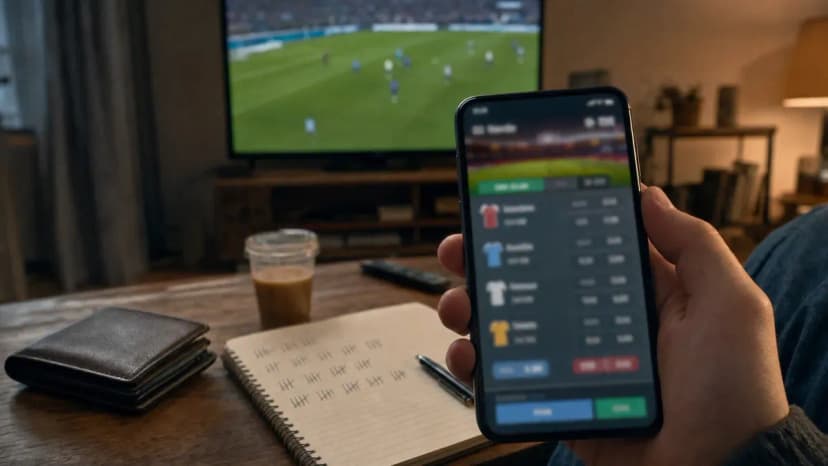
Online casinos: why this format is so addictive

Online casinos: a format built for repetition
Online casinos — slot machines, roulette and blackjack available on a phone or computer — stand apart from other forms of gambling, such as sports betting, because they are available around the clock. Unlike a physical casino, which has opening hours and requires a trip, an online casino can be reached at any time, with no friction at all. Stakes, often small one by one, make repetition feel ordinary: a few euros per bet seem harmless, until you add them up over an evening, a week or several months and the reality looks very different.
This constant availability is not just a practical detail: it removes the natural pauses — the journey, the queue, the closing time — that once gave people a moment to step back before playing again in a physical setting.
The reinforcement mechanism
What makes online casinos particularly addictive is not chance itself, but the speed of the bet-result-rebet cycle. On an online slot machine, this cycle can be completed in a few seconds, allowing dozens or even hundreds of bets in a single session — a pace that is impossible to match in a physical setting.
The "near miss" mechanism also plays a central role: when the displayed result is close to a winning combination without quite being one, the brain reacts almost as if it were a real win, feeding the urge to play again immediately. This mechanism is documented in the literature on pathological gambling and is not unique to online casinos, but its effect is amplified by the speed of digital play.
Useful to know. A "near miss" — an almost-winning result — activates brain mechanisms close to those of a real win, which partly explains why it is so hard to stop after a series of "almost wins".
Warning signs
- Stakes that gradually rise to recapture the same excitement as at the start.
- Chasing losses in the hope of "winning it back", often by betting more rather than less.
- Lying to those close to you about the amounts really spent, or actively hiding them.
- Being unable to stop at an amount or a duration decided in advance, despite the initial intention to stick to it.
Why people keep playing despite losses
Continuing to play despite repeated losses is largely explained by well-documented thinking distortions among people who struggle with gambling. They are not a lack of intelligence: they affect everyone, but take up a disproportionate place when gambling becomes problematic.
- The illusion of control: the belief that you can influence an outcome that is in fact pure chance — picking "the right moment" to bet, spotting a "hot" machine, following a method.
- The gambler's fallacy: the idea that after a long series of losses, a win becomes "more likely". In reality, each round is independent of the previous one: the machine has no memory.
- Chasing losses: playing again to recover the money lost, which most often leads to losing more and raising the stakes.
- Selective memory: remembering wins intensely, even rare ones, and playing down the accumulation of losses.
Spotting these thoughts at the moment they arise is one of the most useful areas of work in treatment.
Consequences specific to the online format
Easy access to credit — saved bank cards, instant payments, sometimes consumer credit offered by some operators — speeds up financial commitment compared with a physical casino, where withdrawing cash adds friction. The absence of social witnesses is another aggravating factor: in a physical casino, the presence of other players or staff can play a role, however small, in regulation or alert. Online, the lack of an outside gaze encourages isolation, which in turn keeps gambling going with no possible outside intervention.
Point of caution. These consequences are not anecdotal: easy access to credit and the isolation specific to the online format can make a situation worse much faster than an equivalent physical form of gambling.
The impact on those around you
Problem gambling does not only affect the person who gambles. A partner often discovers the situation late, through a bank statement or an unexplained overdraft, with a sense of betrayal tied to the lies that accompanied the losses. Debts can weigh on the whole household, and trust is sometimes slower to rebuild than the financial situation itself.
Relatives also have the right to be helped, regardless of what the person who gambles decides to do. The Joueurs Info Service helpline (09 74 75 13 13, in France) is open to gamblers and their relatives alike, anonymously and free of charge.
What is not a problem
Gambling occasionally for pleasure, with a budget set in advance and respected, with no financial consequences and no lying to those around you, is not in itself a behavioral addiction. What should raise concern is loss of control — the gap between the original intention and actual behavior — not the simple fact of gambling.
How an addiction specialist can help
Treatment focuses on assessing loss of control and on specific work on mistaken beliefs about chance — the idea of a "system" that would work, or the conviction of being "due" a win after a series of losses. These beliefs, common among people who struggle with gambling, keep play going well beyond what the logic of chance would justify.
When debts have already built up, additional support around over-indebtedness may be needed alongside the addiction work — the two approaches do not replace each other but complement each other.
Frequently asked questions about online casinos
How is it different from sports betting?
Sports betting is a wager on an outside event, with a delay between the stake and the result. An online casino relies on a near-instant bet-result cycle that can be repeated continuously, which fundamentally changes the reinforcement dynamic.
Can you self-exclude from gambling sites?
Yes, the Autorité Nationale des Jeux (ANJ, the French gambling regulator) offers a real and verifiable self-exclusion scheme. It does not guarantee on its own that you will stop gambling, but it is a concrete tool to include in a broader support plan.
Can a relative do something?
A relative can raise the alarm and offer support without taking the place of a professional: mention what they have observed without judgment, encourage a consultation, and look into the resources available if the household is in debt.
When should you seek help?
As soon as stakes escape the control decided in advance, lies appear about the amounts spent, or gambling starts to create financial or relationship tensions.
This article is for general information and does not replace individual medical advice. Joueurs Info Service (France): 09 74 75 13 13 (anonymous, free call).