
Sports betting addiction: which signs should raise concern?
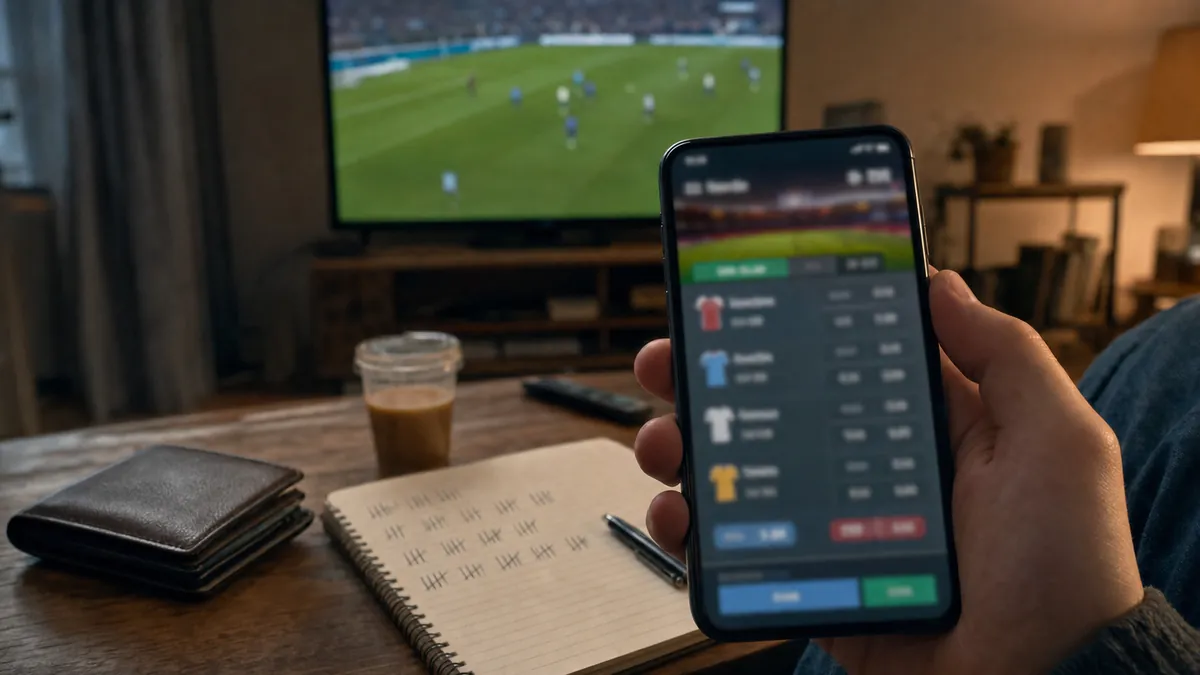
Betting on a match is not automatically a sign of a problem. For some people, it remains occasional, framed and limited. For others, gambling gradually takes up more space than expected: more time, more money, more mental tension, and sometimes more secrecy too.
It is often this shift that raises questions. Not just the amount lost. Not just the number of bets. But the moment when an activity presented as entertainment starts to occupy the mind, the emotions, the budget and relationships.
Key point The right benchmark is not only what is lost, but the place gambling takes in daily life and the real freedom it leaves.
Sports betting is part of non-substance addictions. It is not simply a lack of willpower or a moral failing. Like other addictive behaviours, it can develop around a reward circuit, a search for relief, the illusion of control and automatisms that gradually reduce a person’s real freedom.
Why sports betting can become a trap
Sports betting brings together several factors that encourage repetition.
First, it is available all the time. There is no longer any need to go to a betting shop: a smartphone is enough. Access is fast, discreet and continuous. Second, the offer is broken down into countless options: pre-match, live, exact score, first scorer, accumulators, micro-events. This multiplies both betting opportunities and mental relaunches.
Another important feature is that sports betting often gives the impression that the game can be “understood” and therefore controlled. Following football, knowing a team, analysing line-ups or statistics can create a real sense of competence. Yet that perceived competence can hide the fact that an irreducible degree of uncertainty remains. This is where the illusion of control often appears.
Useful resource Problem gambling is not limited to money lost. The tension of waiting, the near-win, the “almost successful” bet and the idea of winning it back also keep the loop going.
Finally, the reward system is especially effective. It is not based only on wins. It is also based on expectation, anticipation, the near-win, the “almost successful” bet, the promise of winning it back, and the tension of following the match live. Even a loss can restart the loop if it feeds the idea that only a little was missing for a win.
The first signs that should raise concern
The first signs are not always spectacular. They often appear in a diffuse way.
One common marker is the amount of mental space taken up by gambling. People do not only bet at the moment of placing the wager: they compare odds, follow line-ups, think about the next match, check results and recalculate. Gambling continues inside the mind even when the screen is off.
Another important sign is the gradual increase in stakes or frequency. The person may tell themselves they are still in control while little by little pushing their own limits back. The framework set at the beginning becomes less stable.
It is also important to pay attention to the urge to bet again after a loss. Wanting to “win it back” is a classic sign. Once betting is used to repair the previous bet, the risk of a spiral rises sharply.
Other signs are more relational: minimising, hiding, rounding numbers, deleting history, avoiding certain conversations, promising that “this was the last time” without it really holding. Secrecy is not always massive at first, but it is often a useful indicator.
Warning When betting is used to recover losses, hide spending or repeatedly soothe internal tension, it becomes important to take a serious look at the situation.
Finally, irritability, tension or nervousness when it becomes impossible to bet or when an important match is approaching can also be part of the first clues to observe.
When gambling takes up too much space
The issue is not limited to money lost. It is especially visible in the impact it has.
Budget is often the first area affected, but not the only one. The person may start spending more than planned, dipping into money meant for something else, postponing a payment or trivialising repeated small losses. Individually, each bet may seem “reasonable”. It is the overall pattern that becomes concerning.
Sleep and attention can also deteriorate. Late matches, compulsive phone checking, rumination after a loss or waiting for a result keep the nervous system on edge. People think about gambling at work, with family, on public transport and sometimes even when waking up.
On the relational side, loved ones often notice a shift: less availability, more irritability, a physical presence without real mental presence, poorly explained spending, a growing climate of mistrust. It is not only gambling that takes up space — it also takes away from everything else.
At this stage, talking about a loss of freedom is often more accurate than talking only about a loss of money. The useful question becomes: am I really choosing, or am I repeating despite myself?
What loved ones often notice before the person concerned does
Loved ones sometimes see things that the person concerned has not yet put into words.
They may notice that a match is no longer watched “for sport” but with unusual tension. They see the place taken by the phone, mood swings depending on the result, irritation when a betting moment is interrupted or when a simple question about money is asked.
They may also spot gradual isolation: the need to be alone during matches, withdrawal from some activities, more frequent fatigue, repeated unkept promises. Sometimes it is budget swings, requests for money or vague explanations that raise the alarm first.
That said, being close does not mean becoming a monitor. Surveillance, tracking or humiliation often makes shame and secrecy worse. It is generally more helpful to calmly name what is worrying you, speak about the concrete impact you observe and open the possibility of talking to a professional.
How to take stock without lying to yourself
A few simple questions can help clarify the situation.
- Do I spend more time than expected thinking about bets?
- Do I bet again to recover a loss?
- Have my stakes increased over time?
- Have I already hidden or minimised this activity?
- Does it affect my budget, sleep, concentration or relationships?
- Have I already tried to cut down without lasting success?
A single yes is not enough to reach a conclusion. However, when several of these markers add up, especially with a feeling of loss of control, it becomes worth taking a serious look.
The goal is not to self-diagnose too quickly. The goal is to get out of vagueness. Putting some precision around frequency, amounts, impact and attempts to control already makes it easier to see what is happening.
When should you ask for help?
There is no need to wait for financial collapse, a breakup or complete exhaustion before seeking help.
Asking for help becomes useful as soon as gambling goes beyond the framework you had set, as soon as loss of control settles in, or as soon as the consequences begin to weigh on daily life. The earlier help is sought, the more likely it is that the situation can be worked on before it becomes entrenched.
An addiction specialist can help take stock without judgement, understand the role gambling has taken in the person’s life, identify triggers, clarify ambivalence and build appropriate support.
Depending on the situation, local public health services, gambling support organisations or regulated self-exclusion tools may be useful. The relevant options depend on the country where you live. These resources do not replace clinical support, but they can help people get out of isolation.
If the situation involves acute psychological distress, suicidal thoughts or immediate danger, contact the appropriate emergency services in the country where you are without delay. This is no longer a matter of editorial advice.
What should not be oversimplified
Telling someone “you just have to stop” is not enough. Blocking an app, deleting an account or promising a fresh start can sometimes help, but it does not always address what gambling was fulfilling: excitement, relief, compensation, numbing, an imagined regaining of control.
Nor should passion for sport be confused with addiction. Enjoying competitions, talking tactics or watching several matches is not in itself a clinical sign. What raises concern is the impact, the forced repetition, secrecy, loss of control and the place taken at the expense of everything else.
Finally, moralising should be avoided. Shame is often already very present. A humiliating discourse does not restore control; it mostly pushes people to hide more.
FAQ
Are sports betting habits a non-substance addiction?
They can become one. Not all bettors develop an addiction, but sports betting does fall within behaviours that can evolve into gambling disorder.
When should you worry?
When betting takes up more space than expected, when it weighs on budget, sleep or relationships, when it becomes hard to stop, or when the person starts hiding what they are doing.
Can you consult even if you do not have debt?
Yes. Waiting for collapse makes no sense. A consultation can be helpful long before major debt appears, as soon as there is a loss of freedom or distress.
Can a loved one ask for advice?
Yes. Loved ones may also need a space to understand what they are seeing, adjust their position and avoid exhausting themselves in reactions that make the problem worse.
When it comes to sports betting, the right benchmark is not only “how much have I lost?” but “how much space does this take up in my life?”. When gambling takes over the mind, the budget, relationships or the ability to choose freely, asking for help early often makes it possible to avoid a heavier spiral.
To place this topic in a broader context, you can also read Addictions, Screens: w, and What is an addiction specialist: role, t.
For more related reading, you can subscribe to the Adikto33 newsletter or request the free ebook.