
Cannabis: when use becomes a support for sleeping, coping or calming down
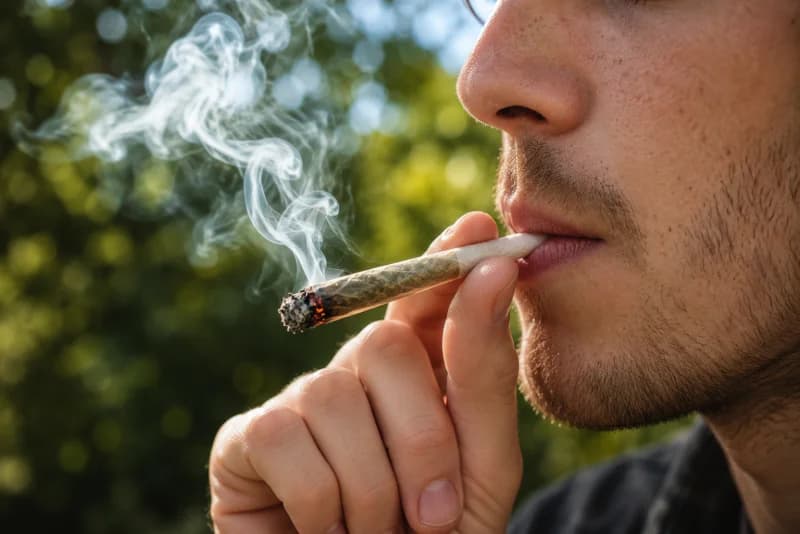
At the beginning, there is almost never provocation or a search for transgression. There is a solution that is tried, and that works. A puff to come down after an overwhelming day, a joint in the evening to short-circuit rumination and fall asleep, or a way to mute a stress that keeps rumbling in the background.
Cannabis enters life through the door of relief. It is a practical, immediate and effective tool for lowering pressure.
Key point. When cannabis starts to serve as support for sleeping, coping or calming down, it is no longer only a habit: it often meets a very concrete need, repeated over time and difficult to replace all at once.
But over the months, what once served as an occasional crutch takes up space. Use becomes more mechanical, harder to avoid, and one realises that it is no longer really chosen but automatic. Looking at that shift in the face, without moral judgement or panic, is already a way of regaining a little freedom. We also explore this through our dedicated addictions page.
Why people begin: understanding the real function of the product
To understand why cannabis takes hold, the question is not how many grams are consumed, but what the product is doing in everyday life. Behind every habit there is a specific function.
1. Silencing the mind in order to fall asleep
At night, when everything stops, the brain often speeds up. The worries of the day, the anxious projections of tomorrow and all kinds of rumination make it hard to let go. Cannabis acts like a fast sedative. It short-circuits the flow of thoughts, dulls the mind and makes it easier to drift into sleep. In the moment, it solves insomnia.
2. Tolerating the load and cushioning stress
When professional or personal pressure exceeds available resources, nervous tension becomes hard to carry in the body. The evening joint then works like a buffer. It creates a clear break between the outside world and private life, and an immediate physical sense of relaxation that lets the pressure drop.
3. Keeping going when everything feels too heavy
Getting through a crisis — bereavement, overload at work, a breakup, a rough patch — requires considerable energy. To keep going without falling apart socially, some people lean on cannabis like an invisible support. It is a discreet backup that helps them get through difficult days without facing reality head-on.
In all these situations, cannabis is serving a role. If it had no usefulness, nobody would return to it. It is precisely because it brings short-term relief so effectively that it becomes entrenched.
From choice to reflex: how the shift settles in quietly
The cannabis trap is never sudden. It seeps in through successive changes, modifying habits almost without our noticing.
Boundaries gradually expand
At first, the rules are clear: only at weekends, or only at evenings with friends. Then the boundaries slide. Friday-night use moves to Thursday, then Wednesday, then becomes a ritual at the end of each day. What was exceptional becomes normal.
Automation settles in
By repeatedly linking the end of work, returning home or a frustration with the relief of cannabis, the brain records a reflex. Simply turning the key in the lock or sitting down on the sofa triggers the urge to smoke. The gesture is no longer driven by conscious pleasure: it is an automatic response to a context.
Freedom slowly erodes
This is the most striking turning point. One no longer simply asks whether there is a desire to use; one begins to dread the moment when there will be no product left. Spending an evening or a weekend without smoking becomes uncomfortable, a source of restlessness or irritability. The freedom to go without has quietly shrunk.
The subtle signs that the product is taking up too much space
You do not need to wait for a crisis or a break-up to ask questions. Several everyday clues point to a relationship that is starting to weigh on you:
- The product occupies your thoughts: even when you are not using, you anticipate when you will be able to, check what you have left, and think about it regularly throughout the day.
- Intent gives way to habit: you had decided that tonight you would skip it. But at the first frustration, the resolution disappears and you smoke, often with a sense of annoyance toward yourself.
- Pauses are always postponed: the idea of taking a break crosses your mind, but the deadline keeps moving back (“next Monday”, “after this difficult period”).
- Cannabis has become your only emotional response: facing stress, boredom, sadness or anger, you no longer have any other reflex to soothe yourself.
- Sleep is deceptive: you fall asleep thanks to cannabis, but you wake up tired, with a sense of mental fog and a lasting sleep debt.
- The need for secrecy: you hide your use, smoke in secret, downplay the amounts if a loved one brings it up, or prefer to be alone to use.
- Those around you notice changes: people say you are more irritable, less available, or you yourself feel your motivation and energy wearing down.
- A lack of drive during breaks: if you end up without the product for an evening or a trip, you feel unusual nervousness, sweating or anxiety that is hard to contain.
What should not be concluded too quickly
Faced with these observations, be careful not to jump to conclusions. Asking questions about your use does not mean everything is going badly, or that you are trapped in a dead end. A few simple principles help keep a clear head:
- Use and dependence are not the same: needing support to get through a rough patch does not mean you have lost control forever.
- Avoid dramatisation: taking stock is a lucid and healthy step, not a dramatic alarm signal.
- The product does not define the person: cannabis is a crutch or a habit that appeared at a certain point in your life. It does not sum up who you are, your skills or your worth.
Regaining distance: what actually helps
No need for a radical revolution or unrealistic promises. Regaining control happens step by step, with realistic methods:
- Observe without judging: for a few days, simply note when you use, what state of mind you are in and what need you were trying to soothe. Putting words to it helps break the automatic pattern.
- Multiply your exits: if cannabis serves to bring pressure down, look for other physical or mental outlets (a brisk walk in the evening, heart coherence, a cool shower, or writing things down).
- Consider a structured break: if willpower alone is wearing thin, you can explore a cannabis stop process to move forward at your own pace, without excessive pressure.
- Seek information without taboo: if the situation weighs on you and you keep going in circles, reading the page What is an addiction specialist? or consulting a doctor can help put things in perspective in a neutral and confidential setting.
Practical tip. For a few days, note only three things: when you use, what you are trying to get from it, and what you would like to feel instead. That is often where the picture becomes clearer.
Frequently asked questions
Can you be dependent on cannabis without smoking all day?
Yes, absolutely. Dependence does not depend on the amount or the time of the first joint. It is measured by the mental space the product occupies, the real difficulty of going without it and the feeling of having lost freedom of choice.
Does cannabis really help you sleep better?
It helps you fall asleep faster by cutting through rumination and producing a sedative effect, but it disrupts sleep structure, especially REM sleep. That is why waking up often leaves a lingering feeling of fatigue.
How do you talk to a loved one who smokes a lot?
It is better to start from facts and from what you feel (“you seem exhausted these days”, “I get the impression stress is weighing on you a lot”) rather than from reproaches or judgements that may make them shut down.
Do you have to stop everything at once?
No. Addiction care is adapted to each situation. Some people choose to stop completely, others to reduce gradually. What matters is to set a direction that makes sense for you.
Urgent situation: if there is immediate danger, suicidal thoughts, severe withdrawal symptoms, violence, loss of consciousness or acute intoxication, contact the emergency services in the country where you are. This article is informational and cannot replace local medical or emergency care.