
Ritalin and methylphenidate: what are the risks of taking it without a prescription?
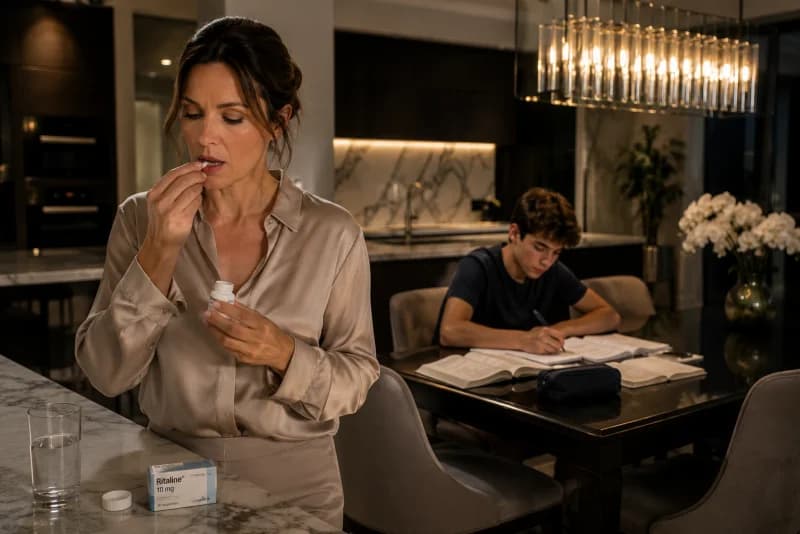
Methylphenidate, sold in particular under the names Ritalin, Concerta or Quasym, is a medicine prescribed for attention deficit hyperactivity disorder (ADHD). It works by stimulating certain areas of the brain involved in attention and control.
Around exam periods, entrance tests or heavy workloads, some people obtain it without a prescription to « boost » their concentration, stay awake or keep going for several days in a row. This practice, sometimes presented as a simple « helping hand », is actually the misuse of a strictly regulated medicine, with real risks.
The French Drogues Info Service helpline is clear: whatever the dose or frequency, the misuse of methylphenidate carries risks, including tolerance, dependence and overdose.
A highly regulated medicine in France
Methylphenidate is not an ordinary medicine. In France, initial prescribing and annual renewals are reserved for hospital specialists and hospital departments specialised in neurology, psychiatry or paediatrics. A methylphenidate treatment requires a diagnosis, an initial assessment and regular follow-up.
The French medicines agency (ANSM), which runs national pharmacovigilance and addictovigilance monitoring for this medicine, reminds us that its use can expose patients to serious side effects, whose risk is limited by respecting the conditions of use.
This framework is not bureaucracy. It exists because the medicine acts on the central nervous system, affects the heart and blood pressure, and can cause serious effects when taken without monitoring.
Why some adults obtain it without a prescription
The misuse of methylphenidate often responds to real pressure: preparing for an exam, chaining revision nights, coping with an excessive workload, maintaining a productivity perceived as essential. It fits into those behavioural addictions and risky behaviours where the line between useful use and constrained use gradually blurs.
The reasoning is often the same: « It’s a medicine, so it must be less dangerous than a drug. » This idea is wrong. Methylphenidate is a psychostimulant close to amphetamines in its mechanism of action. It can produce a sense of performance, but it also exposes to tolerance, a need for growing doses and a rebound effect: fatigue, irritability, difficulty concentrating as soon as the effect wears off.
Drogues Info Service explicitly mentions the risk of tolerance and dependence linked to this misuse. The person who starts « for exams » may need to increase the doses, then find it hard to function without the product.
Physical risks: heart, blood pressure, sleep
Methylphenidate stimulates the cardiovascular system. Even in a young person who appears healthy, taking it without monitoring can cause a faster heart rate, higher blood pressure, palpitations.
The ANSM stresses that adults are more at risk of cardiovascular and cerebrovascular side effects than children, because of comorbidities and the associated treatments often present. A significant share of reported side effects actually concerns adults.
Add neuropsychiatric effects: anxiety, agitation, insomnia, irritability, sometimes problematic thoughts or behaviours. Sleep is often the first thing affected: the « gained » nights are later paid for with exhaustion and sleep debt.
Dependence is possible, even without ADHD
A common belief holds that « you cannot become dependent on a medicine taken to work ». That is false.
Dependence on methylphenidate is not linked to the ADHD diagnosis. It is linked to the effect of the product on the brain and the patterns that develop: regular use, increasing doses, the need to function under the product, difficulty doing without it.
Warning signs include:
- the dose no longer suffices and more is needed;
- the person no longer feels able to work, revise or « function » without the product;
- the product becomes a required step before every demanding task;
- symptoms appear when stopping: fatigue, irritability, low mood, cravings, difficulty concentrating;
- the person hides their use or minimises the amounts.
Interactions and contraindications
Methylphenidate interacts with many substances. It is contraindicated in severe cardiovascular disorders, uncontrolled high blood pressure, hyperthyroidism, glaucoma, or with certain antidepressants (MAOIs). It also carries a risk of interaction with alcohol, cannabis and other stimulants.
Without a medical assessment, a person can take methylphenidate without knowing their own contraindications. Ignored high blood pressure, an unknown heart condition or a silent drug interaction can turn an « occasional » use into a serious accident.
What to do if you recognise yourself
If you take methylphenidate without a prescription, the first step is not shame, it is information.
- Do not stop taking it alone: abrupt withdrawal can cause rebound symptoms. It is better to talk to a professional.
- See a doctor: the general practitioner can take stock, check for possible effects on the heart or blood pressure, and refer.
- Assess the real workload: an exam period or an overloaded schedule may reveal an organisation, sleep or anxiety problem that deserves real support, not a psychostimulant.
- Talk to an addiction specialist: the misuse of a medicine can be discussed without judgement, like any other dependence.
It is also possible to talk to a general practitioner or a local addiction service (CSAPA) for a first conversation.
Does Ritalin taken without a prescription cause dependence?
Yes. The misuse of methylphenidate carries a risk of tolerance and dependence, even in a person without ADHD. The need to increase the doses and the difficulty functioning without the product are classic signs.
What are the risks for the heart?
Methylphenidate can speed up the heart rate and raise blood pressure. The ANSM reports a higher risk of cardiovascular side effects in adults, all the more so without a prior assessment.
Is it more dangerous than drinking a lot of coffee?
Yes. Methylphenidate is a powerful psychostimulant, regulated in France by prescribing restricted to hospital specialists. It carries cardiovascular and neuropsychiatric risks beyond anything comparable to caffeine.
What should I do if I already take Ritalin without a prescription?
Talk to a professional without waiting: a general practitioner or an addiction specialist. Abrupt withdrawal can cause rebound symptoms, so it is better to prepare the process with support.
Can an addiction specialist help with this type of dependence?
Yes. The misuse of medicines is part of addiction medicine. An addiction specialist can help understand the function of the use, reduce gradually and find other answers to the pressure felt. To go further, you can subscribe to the Adikto33 newsletter or request the free ebook: practical information on addictions, without judgement.